Containerized Abrasive Blasting Chamber, KASO-C, TWEKO

Available on back-order


Repair, replacement of parts, 24/7 technical support

Verification in real production conditions

Setting up and checking the functionality of the equipment

Training operators to work with the equipment and providing practical demonstrations of its functionality.
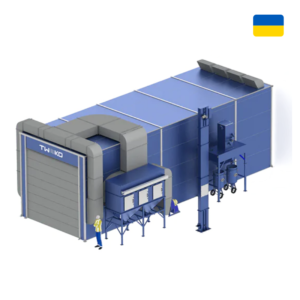
TWEKO KASO-C series containerized abrasive blasting chambers are industrial systems for removing corrosion, mill scale, old coatings and other contaminants from metal surfaces. The working chamber is based on a 40-foot shipping container equipped with a full-area scraper floor and a closed-loop abrasive recovery, reclamation and reuse system.
The KASO-C series is designed for surface preparation before painting, corrosion protection and other coating processes, as well as for cleaning metal components and structures during repair and refurbishment. Process equipment is installed externally at the end of the container, leaving the full internal length available as the working area.
Applications
- Steel structures, beams and trusses
- Pipes and long metal products
- Trailer frames and platforms
- Special-purpose vehicle bodies and superstructures
- Tanks, vessels and welded assemblies
- Agricultural machinery
- Preparation of metal surfaces before protective coating
Containerized Design
In the standard configuration, the working chamber is based on a 40-foot shipping container. There is no internal process compartment, allowing virtually the entire container length to be used for workpieces.
- Working-area dimensions: 12,000 × 2,350 × 2,430 mm
- End loading through the original container doors
- Full-area scraper-floor abrasive recovery system
- Process equipment installed externally behind the end wall
- Original container corner fittings retained for standard transportation
Closed-Loop Abrasive Recovery
During blasting, abrasive is accelerated by compressed air through the blast nozzle and impacts the workpiece surface at high velocity. Spent abrasive, together with rust, mill scale and removed coating particles, falls onto the chamber floor.
The scraper-floor system automatically moves the mixture toward the collection point. A vacuum recovery unit then collects and reclaims the abrasive, separating dust, broken particles and removed contaminants. Reusable abrasive is stored and returned to the blasting process.
- Blasting: compressed-air abrasive cleaning of the surface
- Recovery: automatic abrasive collection by the scraper floor
- Reclamation: separation of dust, contaminants and unusable abrasive
- Reuse: reclaimed abrasive is returned to the operating cycle
The closed-loop system significantly reduces abrasive consumption compared with single-pass blasting and minimises manual clean-up after each blasting cycle. A dedicated connection also allows residual abrasive to be vacuumed from difficult-to-reach areas without opening the main doors.
Dust Extraction and Airflow
Fresh air enters the chamber through intake grilles in the upper section of the container and travels along the full working area toward an exhaust grille at the opposite end. The airflow carries dust and fine abrasive particles toward the filtration and ventilation unit.
The exhaust system maintains the chamber under negative pressure, preventing dusty air from escaping through gaps and spreading to adjacent production areas. Collected dust is deposited in filter hoppers, while cleaned air is discharged outside.
- Directional airflow along the working chamber
- Negative-pressure operation
- Filtration of dusty exhaust air before discharge
- Dust collection hoppers
- Compressed-air pulse cleaning of filter elements
Main System Components
- 40-foot container: main blast-room enclosure
- Scraper floor: mechanised abrasive recovery across the entire working area
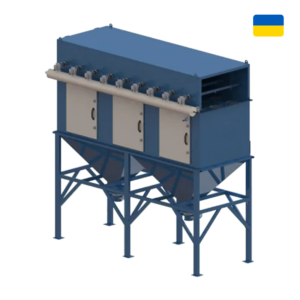
- Filtration and ventilation unit: extraction and cleaning of dusty air
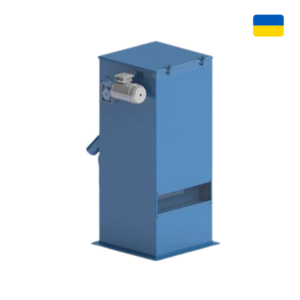
- Vacuum recovery unit: abrasive collection and reclamation
- Ductwork system: transfer of dusty air to the filtration unit
- Blast pot: compressed-air abrasive supply with hoses and blasting nozzle
- External control panel: control of the scraper floor and dust-extraction system outside the dusty working area
Main Benefits
- Containerized solution: working chamber based on a standard 40-foot container
- Large working area: suitable for long components and structures
- Closed-loop abrasive system: recovery, reclamation and reuse of abrasive media
- Mechanised clean-up: scraper floor automatically removes abrasive from the working area
- Dust control: extraction system maintains negative pressure inside the chamber
- External process equipment: full container length remains available for workpieces
- Transportability: standard container corner fittings are retained
Safety and Working Conditions
- Negative pressure keeps dust contained inside the chamber
- Exhaust air is filtered before discharge
- The control panel is positioned outside the chamber
- Mechanised abrasive recovery reduces manual clean-up
- Operators must use appropriate respiratory, eye and skin protection
- Compressed air must meet cleanliness class ISO 8573-1 [4:6:3]
Installation Requirements
The system is intended for indoor or covered installation and is not designed for permanent outdoor operation without protection from weather.
- Level concrete base for the container and external process equipment
- Approximate overall system footprint: 12,951 × 3,559 mm
- Protection from precipitation
- Drainage for roof and site runoff
- Electrical supply: 380 V / 50 Hz
- Separate supply up to 7 kW for the scraper floor and dust-extraction system
- Separate supply up to 6 kW for the vacuum recovery unit
Compressed Air Requirements
- Blast pot: 1,100–1,400 L/min at 8–10 bar
- Filtration and ventilation unit: 300 L/min at 6 bar
- Vacuum recovery unit: up to 100 L/min at 4–6 bar
- Required compressed-air quality: ISO 8573-1 [4:6:3]
Custom Configuration
TWEKO KASO-C systems are manufactured according to the customer’s technical requirements. Working-area dimensions, dust-extraction capacity, abrasive type, process equipment configuration and site layout can be adapted to the specific production application.