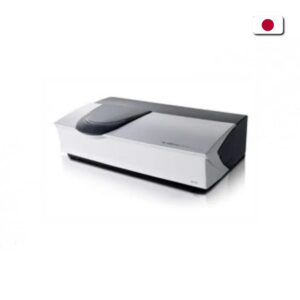
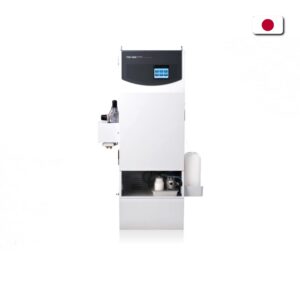
Particle size analyzer, SALD-7500NANO, Shimadzu

Available on back-order


Repair, replacement of parts, 24/7 technical support

Verification in real production conditions

Setting up and checking the functionality of the equipment

Training operators to work with the equipment and providing practical demonstrations of its functionality.
Laser diffraction particle size analyzer
The precise and highly sensitive device is designed to measure the size distribution of particles in the range from 7 nm to 800 nm and is currently an excellent solution for research in the field of nanotechnology and life sciences.
Features
The device is designed to estimate particle size in a wide measurement range from 7 nm to 800 μm and is suitable for measuring samples with particle concentrations from 0.1 ppm to 20 wt. %, it is possible to estimate the dependence of the particle size distribution on the concentration.
The front detector of the “Wing” type with high resolution and sensitivity can collect scattered light up to 60⁰, and the presence of a damped frame that isolates all elements of the optical system from shocks and vibrations eliminates problems related to the adjustment of the optical axis.
Allows measurement of small bubbles (from 100 nm to 60 μm), and also allows real-time tracking of changes in bubble size.
The use of the same measurement conditions (a single light source, a single optical system, and a single algorithm for calculating results) in the entire range of concentrations opens up the possibility of studying the aggregation properties of the sample.
Optionally, the use of WingSALD bio software based on SALD-7500nano allows for quantitative analysis of aggregation (mg/ml) of biopharmaceutical drugs.
The continuous measurement function (1 second interval) provides real-time monitoring of particle distribution.
Functions of statistical processing and 3D display of processes offer great opportunities for multifaceted analysis and evaluation of information.
The WingSALD II software provides a function of automatic selection of the refractive index based on the LDR (reproducibility of light intensity distribution) method, which greatly simplifies the analysis procedure in the absence of reference data for any objects, including previously unstudied mixtures.

 Download brochure